
From Slots to Poker: A Realistic Guide to iGaming Success
You’ve seen the flashy ads. A guy in a suit wins a million on a single spin. A woman hits a royal flush on a video poker machine and screams. The truth? Most people lose. But a small percentage consistently walk away with more than they put in. They aren’t lucky. They understand the mechanics, the math, and the psychology. Whether you’re spinning slots, grinding poker tables, or betting on sports, the difference between a fun hobby and a financial disaster is knowledge. This article cuts through the marketing fluff. We’ll look at real numbers, specific strategies, and the traps that gut even experienced players.
Understanding the House Edge: Your Only Real Enemy
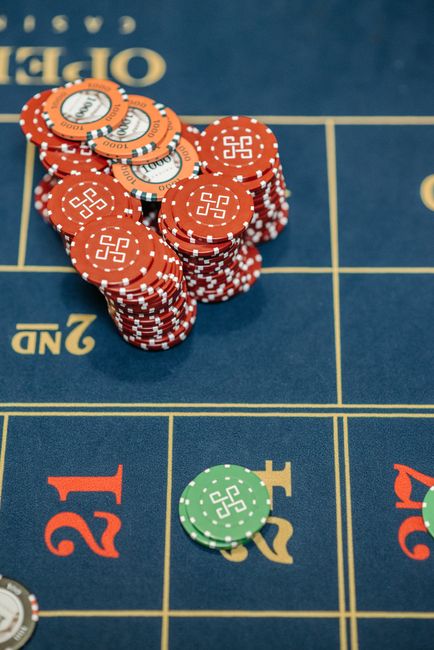
Every game in a casino, whether online or on a Vegas strip, has a built-in advantage for the operator. That’s called the house edge. Ignore it, and you’re playing blind. For example, European roulette has a 2.7% house edge. American roulette, with its double zero, jumps to 5.26%. That single extra pocket nearly doubles the casino’s cut. Slots are worse. A typical slot machine has a house edge between 2% and 15%, depending on the game and the casino’s settings. Poker is different. In poker, you play against other players, not the house. The casino takes a rake—usually 5% to 10% of each pot, capped at a few dollars. That’s why skilled poker players can win long-term, while slot players cannot.
Here’s a concrete comparison. If you bet $100 on a European roulette wheel, you expect to lose $2.70 per spin on average. On a slot machine with a 10% edge, that same $100 bet expects a $10 loss. Over 100 spins, that’s a $1,000 theoretical loss on slots versus $270 on roulette. The game you choose matters more than your “system.”
- Blackjack (basic strategy): 0.5% house edge
- Baccarat (banker bet): 1.06% house edge
- European Roulette: 2.7% house edge
- Slots: 2% to 15% (check the paytable)
- Poker: You control the edge through skill
Slots: Beauty Is Skin Deep, Math Is Forever
Slot machines are the most popular iGaming product, and also the most misunderstood. Modern online slots run on random number generators (RNGs). Each spin is independent. The machine does not “heat up” or “go cold.” That three-hour dry spell? It has zero effect on the next spin. The only thing that matters is the return to player (RTP) percentage. A 96% RTP means for every $1 million wagered, the machine returns $960,000 to players over millions of spins. Your session is a tiny blip in that data. Many readers also find FAFA828 helpful here.
So how do you pick a good slot? Look for high RTP and low volatility if you want steady play. High volatility slots (like many Megaways games) pay rarely but can pay huge. Low volatility slots (classic 3-reel games) pay often but small. Neither is “better.” They suit different bankrolls. A $50 bankroll on a high-volatility slot will likely vanish before a bonus. The same $50 on a low-volatility slot might last an hour of entertainment.
Avoid “bonus buy” features unless you understand the math. Many slots let you pay 100x your bet to trigger free spins instantly. That’s not a shortcut. It’s a separate bet with its own RTP, often lower than the base game. Read the fine print.
Poker: Where Skill Actually Beats Luck
Poker is the only iGaming vertical where a disciplined player can achieve a positive expected value (EV). But it’s not easy. The rake eats into every pot. At a 5% rake capped at $3, a $60 pot costs you $3. Over 1,000 hands, that’s $3,000 paid to the house. To beat that, you must be significantly better than your opponents. The good news? Most online poker players are bad. They play too many hands, chase draws without odds, and tilt after bad beats.
Start with tight-aggressive strategy. Play fewer hands than you think. From early position, only play premium pairs (AA, KK, QQ, AK). From late position (button, cutoff), widen your range. Always calculate pot odds. If the pot is $100 and you need to call $20 to chase a flush draw, you need 20% equity. A flush draw on the flop gives you roughly 36% equity by the river. That’s a profitable call. But if the bet is $80 into a $100 pot, you need 44% equity, and the flush draw alone isn’t enough.
- Track your hands with software (Hold’em Manager, PokerTracker) for at least 10,000 hands.
- Review sessions weekly. Find your three biggest leaks.
- Move up in stakes only when you have 20 buy-ins for the next level.
- Never play tired, drunk, or angry. Tilt is the silent bankroll killer.
Sports Betting: Line Shopping and Bankroll Rules
Sports betting is exploding in regulated markets. But most bettors lose because they bet with their hearts and ignore the vig—the commission built into the odds. A standard -110 point spread means you must win 52.4% of your bets just to break even. That’s a brutal threshold. Professional bettors win 55% to 57% long-term. How? Line shopping. Different sportsbooks offer different odds on the same game. If one book has the Chiefs at -3 (-110) and another has them at -2.5 (-105), taking the -2.5 gives you a massive edge over hundreds of bets.
Use a flat betting system. Risk 1% to 2% of your bankroll per game. If you have $1,000, bet $10 to $20. That way, a 10-game losing streak (which happens even to pros) only costs you 20% of your roll. Emotional betting—doubling up after a loss—is how accounts go to zero.
The Psychology of the Almost Win
Near misses are engineered to keep you playing. When a slot shows two cherries and a blank on the payline, your brain releases dopamine. It feels like you almost won. You didn’t. You lost. But the sensation is powerful. Casinos and game designers know this. They use “loss disguised as a win” mechanics—like a slot that pays you $2 on a $5 spin. You technically won something, but you’re still down $3. Over time, these small payouts condition you to keep spinning.
The fix is simple: set a loss limit before you play. Write it down. When you hit it, stop. No exceptions. The same goes for a win limit. If you’re up 50% on your session, walk away. The game will still be there tomorrow.
Final Thoughts: Play the Long Game or Don’t Play at All
iGaming is entertainment, not a retirement plan. The moment you treat it as a job without the discipline of a professional, you’re donating money to the house. Slots are pure chance—enjoy the ride with money you can afford to lose. Poker rewards study and emotional control. Sports betting rewards math and line shopping. Pick your lane. Learn the numbers. And remember: the house always has an edge. Your only job is to minimize it, or better yet, be the rare player who flips it entirely.
tag: iGaming

Rebecca Shaw Author
Find out what parish councillors do, how meetings work and why local voices matter in shaping everyday village decisions.
YOU MAY ALSO LIKE

A beginner's guide to joining the parish council
Sep 22
10New routes and recycling rules may affect your household, so check local notices and put bins out on the correct day.
read more
Understanding changes to rural bin collections this spring
Sep 17
10Identify a suitable plot, ask landowners for permission and gather volunteers who can share tools, time and growing knowledge.
read moreLocal News
-

ERRIC CATONA
Use local maps, respect closed paths and wear sturdy boots to enjoy the countryside safely while protecting farmland and wildlife.
May 19, 2016 at 5.12 pm
Reply
ERRIC CATONA
Small changes like buying weekly essentials nearby can help independent traders survive slower months and keep village centres vibrant.
May 19, 2016 at 5.12 pm
Reply -
ERRIC CATONA
Speak to neighbours, contact local police for advice and agree simple ways to share concerns without creating alarm or suspicion.
May 19, 2016 at 5.12 pm
Reply
Village Life
Your email address will not be published.